

In Dubai, a landlord cannot legally evict you just because you refuse a 15% rent increase. Any rent hike must comply with the RERA Rent Index and be communicated with at least 90 days’ written notice. If RERA or the landlord does not justify the increase, threatens eviction without grounds, it’s considered illegal under Dubai Tenancy Law No. 26 of 2007 and its amendments.
This question was raised by a tenant who was unsure whether their landlord could legally force them to accept a 15% rent increase.
Question: “What should I do next? I’m worried my landlord might harass me about leaving. The building follows the 2.5% rent increase limit, and the LTB stated that he can’t raise the rent by 15% or evict me for refusing. I emailed him, and he called, saying I must sign a new lease or he’ll evict me. What are the eviction rules? Can he change the locks or continue to harass me? I’m having a baby soon, and this is so stressful.”
Answer: You’re protected under the 2.5% rent increase rule, so your landlord can’t force a 15% hike or evict you just for refusing. He must follow legal eviction procedures through the LTB. He can’t just change locks or harass you. Keep all communication in writing and reach out to the LTB if he pressures you. Take care and try not to stress too much.
It’s a common concern among residents in Dubai, especially with rising market rents, so let’s break down what the law actually says and how tenants can protect their rights.
Understanding the Situation
Imagine you’ve been living in your Dubai apartment for years, and your lease is about to be renewed. Suddenly, your landlord says you must agree to a 15% rent increase or face eviction. This kind of pressure is becoming more common as property management Dubai market grows rapidly and demand rises.
However, not every rent increase is legal, and not every eviction notice holds ground. The tenant’s first step should always be to understand the legal framework that protects them. Dubai’s tenancy law aims to create a fair balance between landlords and tenants, ensuring neither party abuses their position.
Legal Framework: Dubai Tenancy Law and RERA Regulations
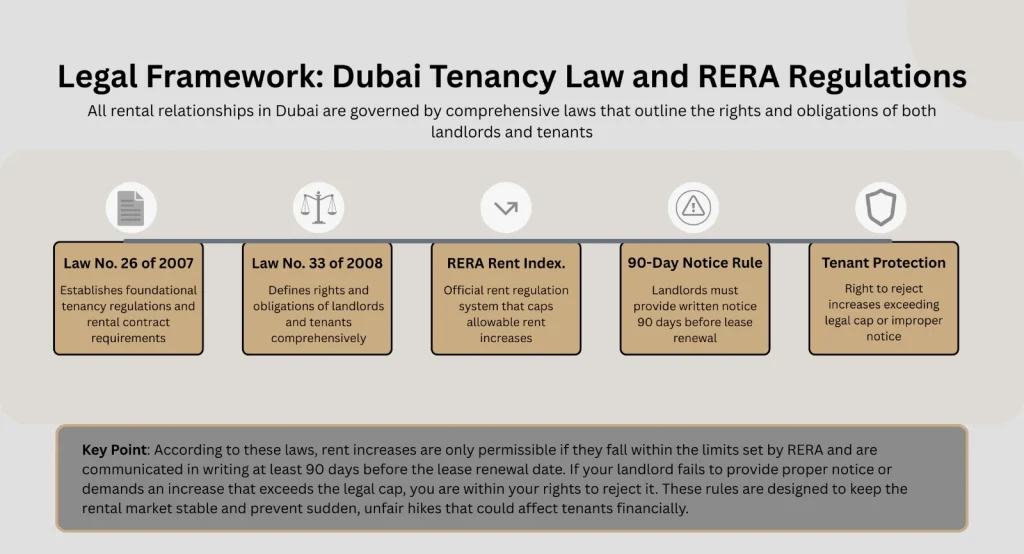
All rental relationships in Dubai are governed by Law No. 26 of 2007 and Law No. 33 of 2008, which outline the rights and obligations of both landlords and tenants. The Real Estate Regulatory Agency (RERA) manages rent regulation through its official rent index.
According to these laws, rent increases are only permissible if they fall within the limits set by RERA and are communicated in writing at least 90 days before the lease renewal date. If your landlord fails to provide proper notice or demands an increase that exceeds the legal cap, you are within your rights to reject it.
These rules are designed to keep the rental market stable and prevent sudden, unfair hikes that could affect tenants financially.
Is a 15% Rent Increase Actually Legal?
Not necessarily. A 15% rent increase is only legal under very specific conditions. The amount your rent can be raised depends on how much lower your current rent is compared to the average market rent for similar properties in your area.
For example, if your rent is only slightly below the average, the law may not allow any increase at all. But if your rent is 31–40% lower than the market rate, then a 15% rise might be justified. Anything beyond that would breach RERA’s limits.
You can easily check this yourself using the RERA Rent Calculator, available on the Dubai Land Department (DLD) website or through the Dubai REST app. The calculator gives official, legally recognized results, which you can use as proof in case of a dispute.
Required Notice Period for Rent Increase
One of the most important tenant protections in Dubai is the 90-day notice rule. A landlord must notify the tenant in writing at least three months before the contract renewal if they plan to increase the rent or change any contract terms.
If this notice is not given within the legal timeframe, you can continue under your existing rental terms without accepting any increase. This rule ensures that tenants have enough time to decide whether they want to renew, negotiate, or move to another property.
Can a Landlord Evict You for Not Accepting the Increase?
The short answer is no. A landlord cannot evict you just because you refused to accept a rent increase that isn’t legally valid.
Under Dubai’s tenancy law, eviction can only happen for specific reasons, such as if the landlord needs the property for personal use, wants to demolish or renovate it, or if the tenant fails to pay rent after receiving proper notice. Even in these cases, the landlord must serve a 12-month written notice through the Notary Public or registered mail.
If your landlord threatens eviction without meeting these conditions, it’s considered harassment and can be challenged at the Rental Dispute Settlement Center (RDSC).
How to Verify the Legal Rent Using the RERA Calculator
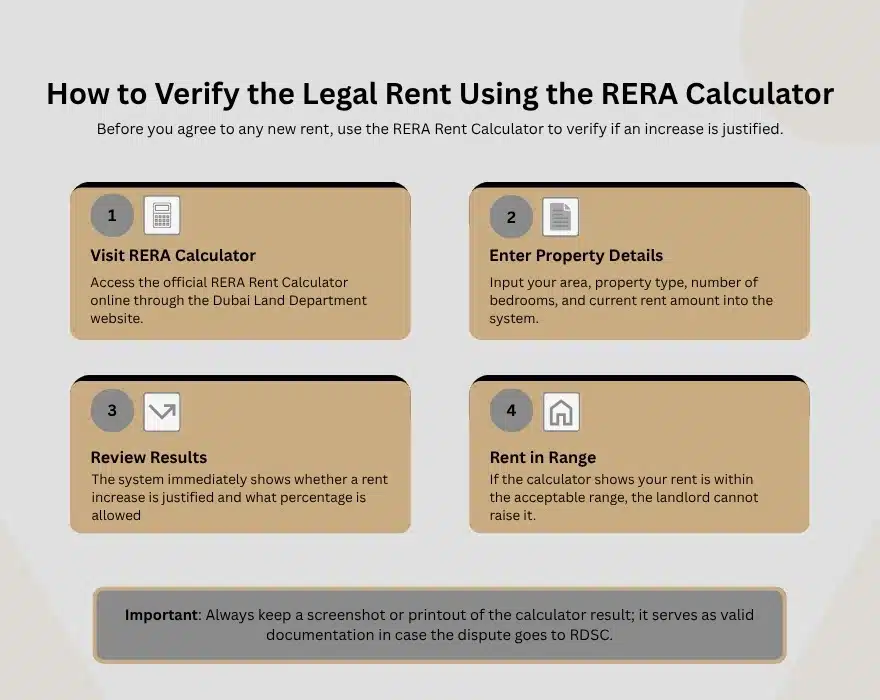
Before you agree to any new rent, visit the RERA Rent Calculator online. Enter your area, property type, number of bedrooms, and current rent amount. The system will immediately show whether a rent increase is justified and what percentage is allowed.
If the calculator shows your rent is within the acceptable range, the landlord cannot raise it. This simple check can save you from unnecessary disputes and ensure you stay within your rights.
Always keep a screenshot or printout of the calculator result; it serves as valid documentation in case the dispute goes to RDSC.
What to Do If You’re Being Threatened or Pressured
It’s never easy when a landlord pressures you to sign a higher lease or threatens to evict you. The key is to remain calm and handle the situation systematically.
First, keep all communication in writing, whether by WhatsApp, email, or text. Avoid verbal agreements, as they are difficult to prove later.
Second, verify the rent increase using the RERA calculator. If it’s illegal, politely inform your landlord of the correct rule and provide a reference from the Dubai Land Department website.
Finally, if the landlord continues to threaten eviction or refuses to follow the law, file a complaint with the Rental Dispute Settlement Center. The process is straightforward, and the authorities often rule in favor of tenants if the law has been violated.
Filing a Complaint with the Rental Dispute Settlement Center (RDSC)
The RDSC is the official body responsible for handling rental conflicts in Dubai. You can file your complaint online through the Dubai REST app or in person at the RDSC office in Deira.
You will need copies of your Ejari certificate, tenancy contract, Emirates ID, and any written evidence of communication with your landlord. The complaint is then reviewed, and both parties are called for a hearing.
Most disputes are resolved within 30–45 days, and in many cases, RDSC decisions prevent illegal evictions or unjustified rent increases.
Tips to Negotiate Rent Increase Peacefully
Even if the rent increase is legal, it doesn’t mean it’s non-negotiable. Many landlords are willing to discuss terms, especially if you’ve been a responsible tenant.
Be polite but firm when discussing the issue. Present data from the RERA calculator, highlight your record of timely payments, and mention how long you’ve been living there. You can also suggest paying several months in advance or signing a shorter renewal period. These gestures often help in reducing the final increase percentage.
Role of a Real Estate Professional in Rent Disputes
Working with a registered real estate agency like Grosvenor Real Estate Dubai can make a big difference. Professionals understand tenancy laws, rental market trends, and RERA regulations. They can mediate with landlords, verify rent legality, and help you file official complaints if necessary.
More importantly, they can guide you toward fair rental deals and prevent similar conflicts in the future. Whether you’re a tenant or a landlord, having expert support ensures all actions remain compliant with Dubai law.
Final Thoughts
If your landlord is threatening to evict you for not agreeing to a 15% rent increase, don’t panic. In Dubai, rent hikes must follow RERA’s legal framework and proper notice procedures. A landlord cannot legally evict you for refusing an unlawful increase.
Always double-check rent calculations using official tools, document all communication, and seek professional advice when needed.
Grosvenor Real Estate Dubai helps tenants and investors navigate rental laws confidently, negotiate fair agreements, and enjoy a smooth real estate experience.
If you’re facing rent pressure or are uncertain about your rights, reach out to our team, your trusted partner for secure and transparent property solutions in Dubai.