
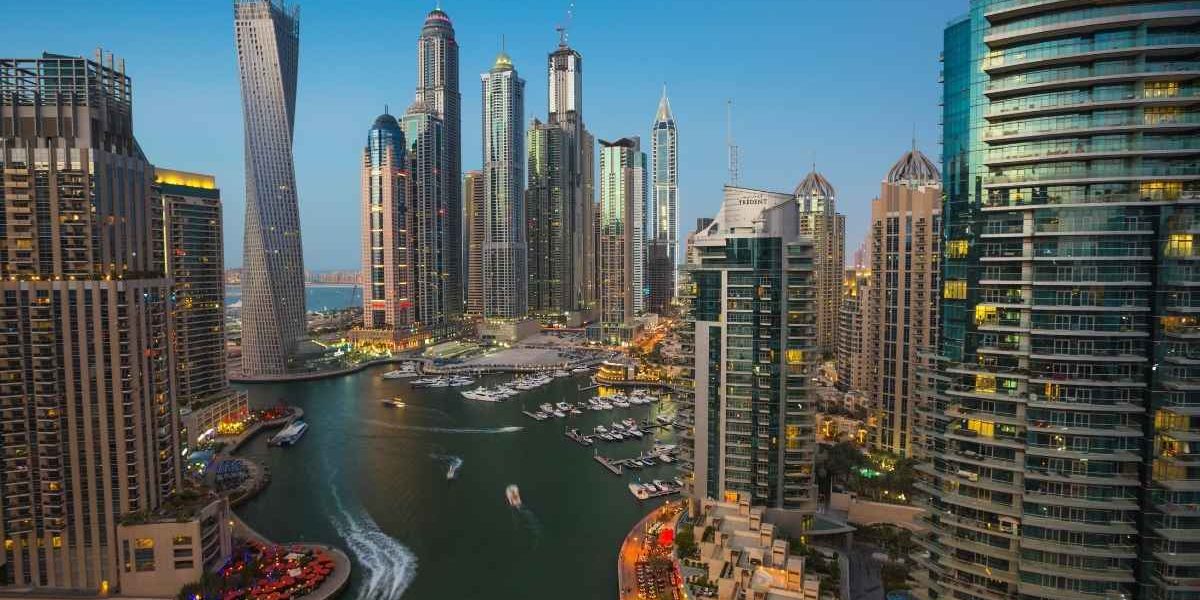
Buying a property in Dubai is open to both residents and foreigners in designated freehold zones. The total cost includes the property price, a 4 % Dubai Land Department (DLD) fee, registration charges, and agent commissions. With clear legal rules, tax-free returns, and high rental yields, Dubai remains one of the world’s most attractive real estate markets.
Why Should You Consider Buying a Property in Dubai?
Dubai has transformed into a global investment hub offering luxurious living, stable infrastructure, and high returns on real estate. Unlike many global cities, Dubai does not have an annual property tax or capital gains tax, which makes it extremely appealing to investors and homebuyers alike. The city’s modern lifestyle, safety, and international connectivity attract professionals from around the world who seek both comfort and financial gain.
Another major reason is the potential for strong rental yields. Many areas in Dubai offer returns between 5 % and 8 % annually, depending on the location and property type. Combined with steady price appreciation and government-backed property regulations, Dubai offers long-term financial security and lifestyle benefits. If you’re exploring the best real estate investment in Dubai, understanding these advantages can help you choose properties that deliver strong returns and long-term growth.
How Does the Property Buying Process Work in Dubai?
The process of buying property in Dubai is relatively straightforward once you understand the main steps. First, decide whether you want a ready or off-plan property. Ready properties are completed and can be occupied or rented immediately, while off-plan projects are still under construction but usually come with flexible payment plans and lower prices.
Once you’ve selected your property, you and the seller sign a Memorandum of Understanding (MoU) that includes price, payment terms, and conditions. A 10 % deposit is normally paid at this stage to secure the deal. Afterward, both parties obtain a No Objection Certificate (NOC) from the developer confirming that there are no outstanding dues. Finally, the property is registered with the Dubai Land Department, where you’ll pay the transfer fee and receive your official title deed.
What Are the Main Costs and Fees When Buying a Property in Dubai?
While Dubai’s real estate market offers good value, it’s important to budget for more than just the purchase price. Buyers should plan for around seven to ten percent in additional fees. The largest of these is the DLD transfer fee, which is four percent of the property value and is usually paid by the buyer.
There are also registration and administrative fees for the title deed, which depend on the property’s value. Real estate agents typically charge a two percent commission plus VAT. If you’re using a mortgage, banks apply a mortgage registration fee of 0.25 % of the loan amount, along with a small valuation charge. Developers may also collect advance service charges to cover building maintenance, security, and communal facilities. These recurring costs vary by area, so it’s best to confirm them before signing any agreement.
Can Foreigners Buy Property in Dubai?
Yes. Foreigners can buy, own, and sell properties in Dubai, but only within designated freehold zones. These areas include popular locations like Dubai Marina, Business Bay, Jumeirah Village Circle, Downtown Dubai, and Palm Jumeirah. Ownership in these areas gives full rights to sell, rent, or lease your property without restrictions.
However, it’s crucial to verify that the property you’re purchasing is located in a freehold zone and that all contracts are registered under the Real Estate Regulatory Agency (RERA). Working with a licensed real estate agent ensures that the transaction follows Dubai’s property laws and avoids any legal complications.
What Legal Requirements Should Buyers Know Before Purchasing?
Before buying property in Dubai, both local and foreign buyers must meet several legal requirements. The transaction must be officially registered with the Dubai Land Department within sixty days of signing the sale agreement. The buyer must also ensure that the developer or seller has cleared all outstanding dues and obtained the necessary NOC.
For mortgage buyers, most banks require a down payment of twenty to twenty-five percent of the property value for expatriates, while UAE nationals may qualify for slightly lower rates. Buyers must also provide valid identification, proof of income, and bank statements for loan processing. Verifying all documents and contracts with legal professionals can help prevent future disputes or ownership delays.
What Is the Difference Between Off-Plan and Ready Properties?
Off-plan properties are those still under construction or recently launched by developers. They often come with lower prices and flexible installment plans, making them attractive for investors who can wait for completion. However, there are risks involved, such as project delays or construction quality issues, so always check the developer’s RERA registration and whether funds are held in an escrow account.
Ready properties, on the other hand, are completed and available for immediate possession or rental. They offer the advantage of physical inspection and instant income generation through leasing. While the upfront cost may be higher than off-plan projects, ready properties come with lower uncertainty and faster returns. The choice between the two depends on your investment goals, timeline, and budget.
What Are the Latest Real Estate Market Trends in Dubai?
The Dubai property market remains one of the most dynamic globally, shaped by both luxury investments and affordable housing demand. In recent years, luxury communities like Palm Jumeirah, Emirates Hills, and Downtown Dubai have continued to attract international buyers looking for high-end residences and Golden Visa opportunities.
Meanwhile, mid-range areas such as Jumeirah Village Circle and Dubai South have become popular for first-time buyers due to their affordability and improving infrastructure. Analysts note that the increasing number of new housing projects could lead to a more balanced market in the coming years, giving buyers stronger negotiating power. Despite this, rental yields remain among the highest in the world, sustaining Dubai’s appeal as a profitable and stable property destination.
What Mistakes Should You Avoid When Buying Property in Dubai?
A common mistake among new buyers is underestimating the total cost of purchase. Many focus only on the property price and forget about DLD fees, agent commissions, and ongoing maintenance charges. Failing to verify the legal status of the property or the developer’s track record is another major risk.
Some investors rush into off-plan deals without reading the fine print, leading to surprises like delayed handovers or hidden service fees. Financing also requires attention, as mortgage approvals can take time and may involve additional requirements for expatriates. To avoid setbacks, always get mortgage pre-approval and hire a RERA-registered agent who can guide you through every step of the transaction.
What Documents Do You Need to Buy a Property in Dubai?
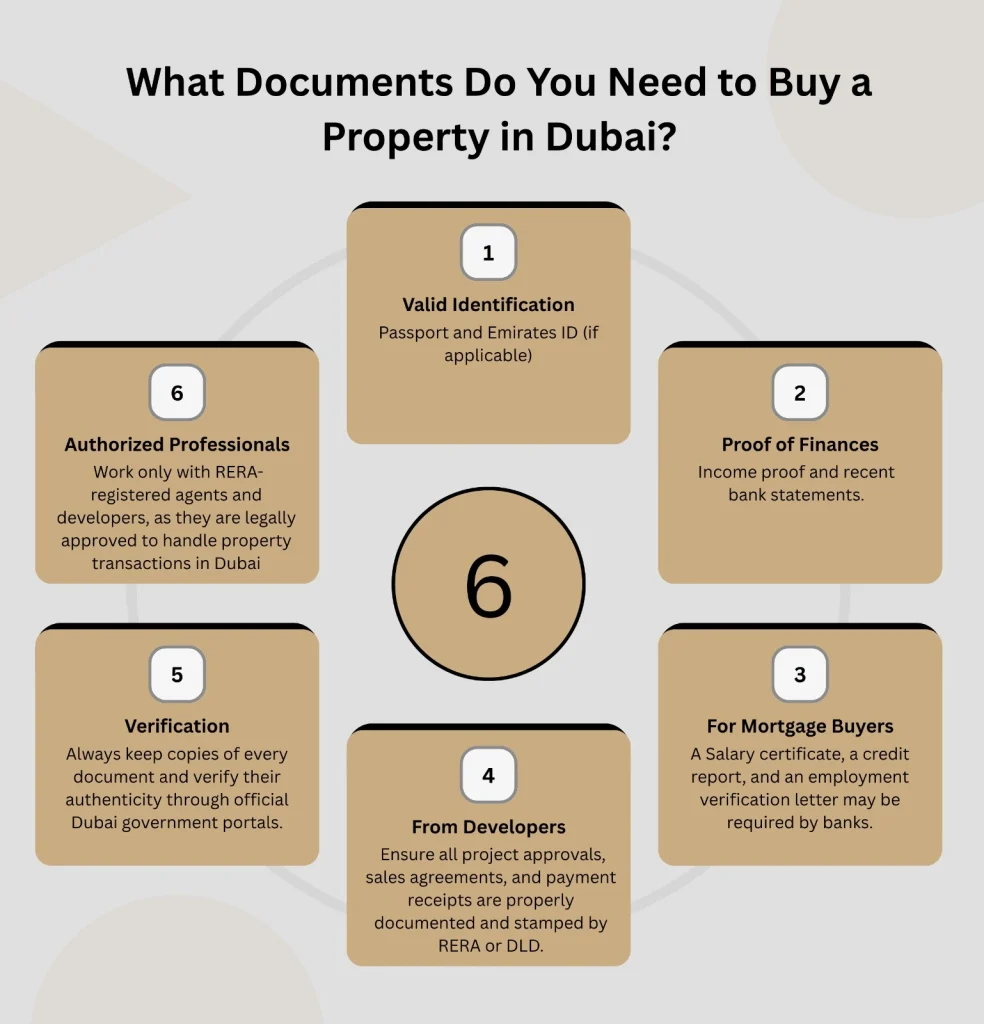
Valid Identification: Passport and Emirates ID (if applicable).
Proof of Finances: Income proof and recent bank statements.
For Mortgage Buyers: A Salary certificate, a credit report, and an employment verification letter may be required by banks.
From Developers: Ensure all project approvals, sales agreements, and payment receipts are properly documented and stamped by RERA or DLD.
Verification: Always keep copies of every document and verify their authenticity through official Dubai government portals.
Authorized Professionals: Work only with RERA-registered agents and developers, as they are legally approved to handle property transactions in Dubai.
Can Buying Property in Dubai Help You Get a Residency Visa?
Yes, purchasing property in Dubai can qualify you for a residency visa under certain conditions. Investors who buy property worth AED 1 million or more may be eligible for a renewable two- or five-year investor visa, depending on the type of investment. The property must be fully paid for and not mortgaged to qualify. This visa allows you to live in the UAE, sponsor your family, and enjoy several local benefits, making property ownership even more rewarding.
Tips for Buying Property in Dubai
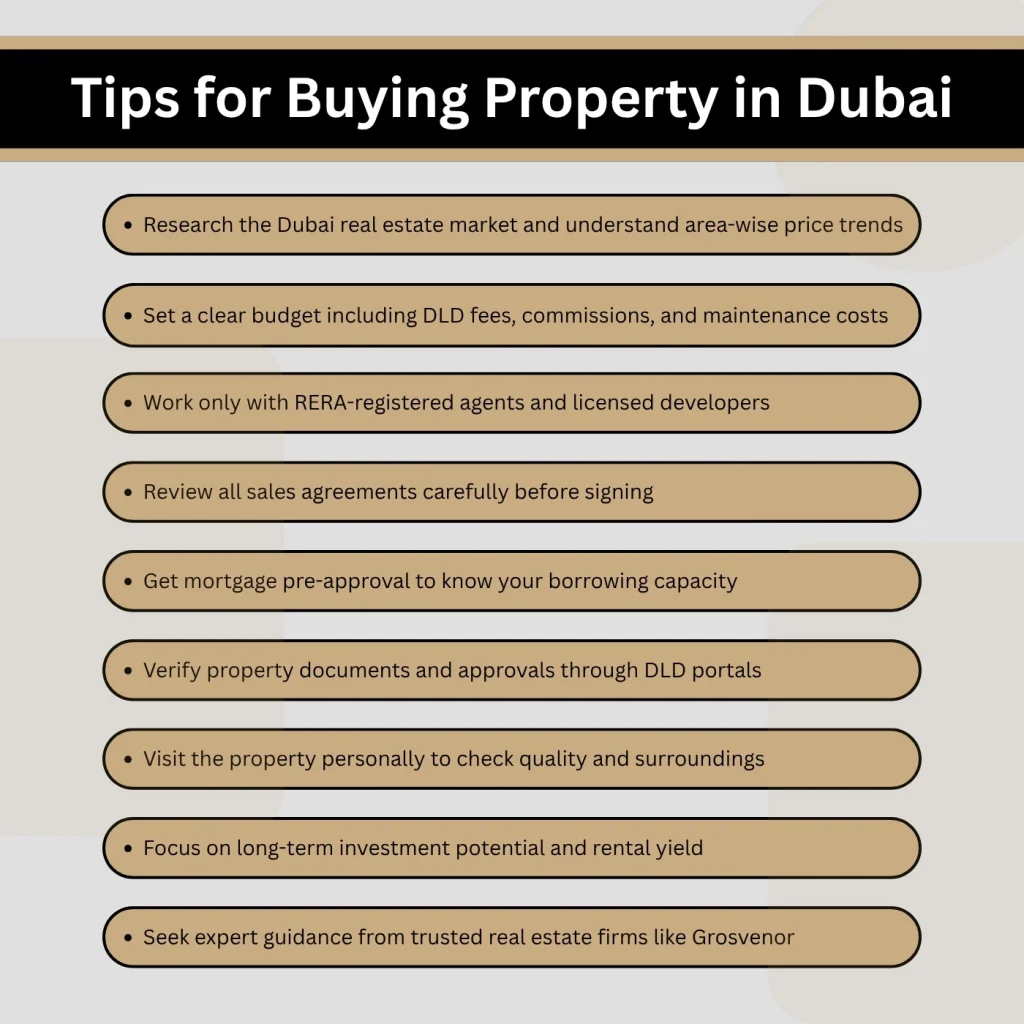
- Research the Dubai real estate market and understand area-wise price trends.
- Set a clear budget including DLD fees, commissions, and maintenance costs.
- Work only with RERA-registered agents and licensed developers.
- Review all sales agreements carefully before signing.
- Get mortgage pre-approval to know your borrowing capacity.
- Verify property documents and approvals through DLD portals.
- Visit the property personally to check quality and surroundings.
- Focus on long-term investment potential and rental yield.
- Seek expert guidance from trusted real estate company in Dubai.
How Grosvenor Helps You Buy the Perfect Property in Dubai?
Grosvenor real estate makes buying a property in Dubai smoother and more secure by guiding you through every stage of the process, from property selection to final registration. Their team of RERA-certified agents ensures that every transaction follows Dubai Land Department regulations, helping you avoid legal or financial mistakes. Whether you’re an investor seeking high-return opportunities or a first-time buyer looking for your dream home, we provides expert advice, transparent pricing, and access to exclusive listings across Dubai’s top communities.
Discover the latest property for sale in Dubai with Grosvenor real estate and find your ideal home or investment property with ease. With personalized support and in-depth market insights, Grosvenor helps you make confident, well-informed real estate decisions in one of the world’s most dynamic markets.
Key Takeaway for Buyers
Buying a property in Dubai can be a smart and secure investment when done correctly. The process is transparent, the returns are strong, and the legal framework protects buyers’ rights. However, success depends on understanding every step, researching the right location, budgeting for all fees, and working with verified professionals.
Dubai’s property market continues to offer a rare combination of lifestyle luxury and financial opportunity. With careful planning and professional advice, owning property in Dubai isn’t just a dream; it’s a realistic goal that can bring both comfort and long-term growth.