
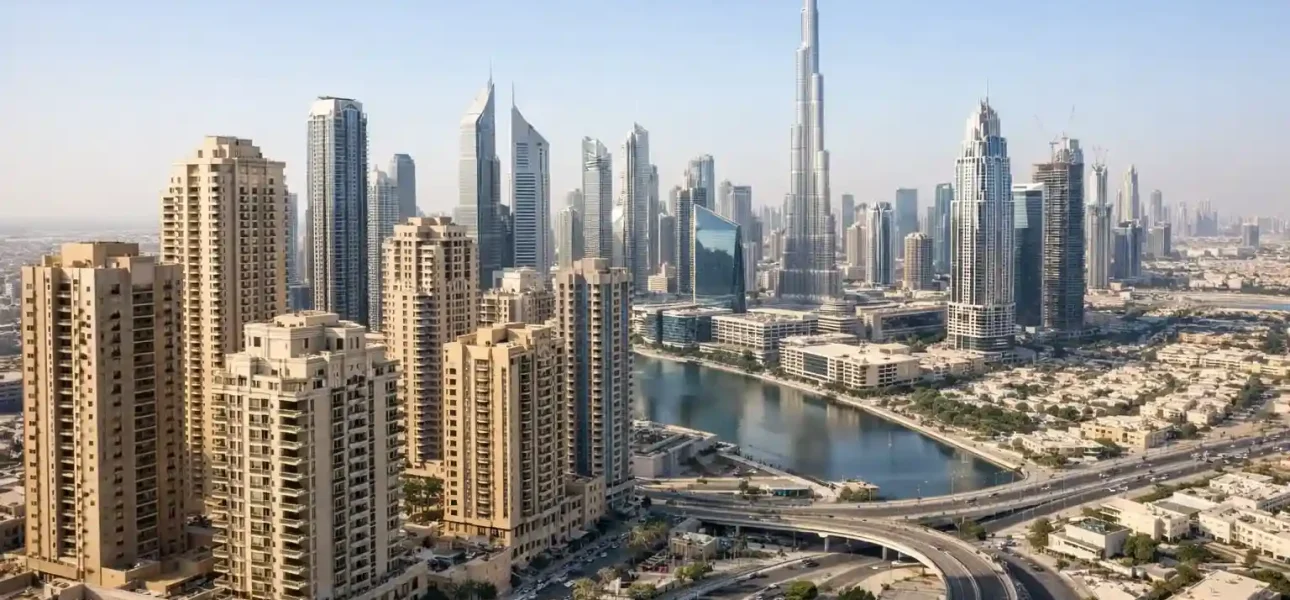
Dubai’s skyline is young compared to cities like London or New York, yet many towers built in early development phases are now entering middle age. As buildings grow older, investors want to know how long structures truly last and whether developers compensate owners when aging affects performance, safety, or value. Understanding these factors is key to long-term investment decisions, especially in high-density areas where refurbishment or redevelopment may eventually be necessary.
The age of a building in Dubai affects long-term value, maintenance costs, and regulatory compliance. Developers offer compensation only for defects within the liability period, usually 10 years for structural issues. After that, investors rely on maintenance, reserve fund planning, and upgrades to protect asset value rather than direct payouts.
What Does “Age of Building in Dubai” Mean for Investors?
The age of a building in Dubai refers not just to the number of years since handover but also to the condition of core systems like concrete structure, HVAC, plumbing, and fire safety. Dubai’s environment, which includes extreme heat, humidity, and salt exposure near the coast, can accelerate wear if maintenance is neglected. In the competitive real estate Dubai market, a newer building may perform poorly if built with low-quality materials, while an older one with strong maintenance can remain attractive to investors.
How Long Do Buildings Generally Last in Dubai?
Experts typically estimate that well-built Dubai towers can last anywhere from 50 to 80 years if properly maintained. Mid-tier developments may have a shorter effective lifespan of about 25 to 40 years due to cost-cutting and deferred maintenance. Longevity depends on construction quality, environmental exposure, ongoing upgrades, and structural integrity assessments.
How Developers Compensate Investors When a Building Gets Old
Developers are not required to buy back property simply because it has aged. Compensation applies mainly within legal defect liability periods. This includes a standard structural coverage period of around ten years, during which major structural faults must be repaired by the developer. Mechanical and installation faults, such as HVAC or electrical systems, may have shorter coverage periods, usually around one year from handover.
After these periods expire, responsibility shifts to the owners’ associations and property managers. They handle repairs through service charges and reserve funds rather than direct developer compensation. If a building requires major upgrades due to age, costs are typically shared among owners rather than reimbursed by the developer.
Why Dubai Does Not Have Mandatory Buyback for Old Buildings
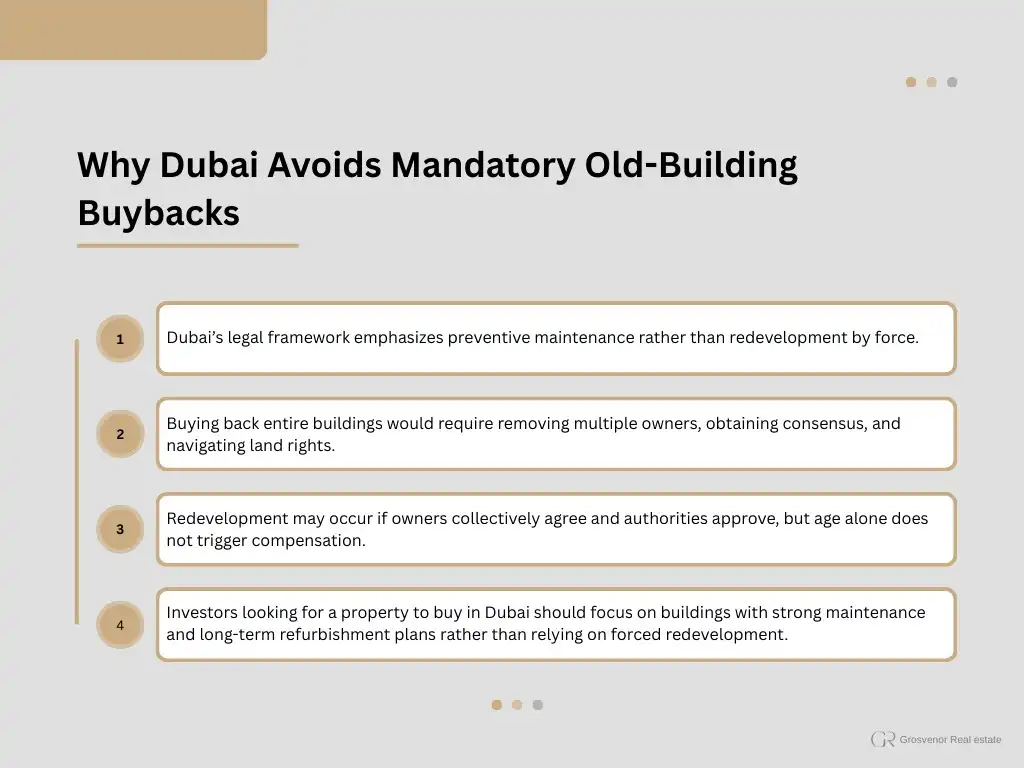
Dubai’s legal framework emphasizes preventive maintenance rather than redevelopment by force. Buying back entire buildings would require removing multiple owners, obtaining consensus, and navigating land rights. Redevelopment may occur if owners collectively agree and authorities approve, but age alone does not trigger compensation. Investors looking for a property to buy in Dubai should focus on buildings with strong maintenance and long-term refurbishment plans rather than relying on forced redevelopment.
How Investors Can Protect Value as Buildings Age
Investors should monitor maintenance history, service charges, and renovation cycles. The best way to preserve value is through condition assessments that evaluate structural stability, façade safety, and MEP performance. Buildings that proactively upgrade elevators, insulation, cooling systems, and external cladding often maintain rental demand longer and delay deterioration.
A building approaching 15 to 20 years old often becomes more maintenance-intensive. Effective property management, including strategic planning and budgeting, is crucial, making professional property management in dubai services valuable for monitoring repairs and reserve funds. Investors who stay involved in owners’ association decisions tend to protect their asset value more effectively than passive owners.
Age of Building in Dubai vs Expected Costs & Value Impact
| Building Age | Typical Condition | Investor Impact | Recommended Action |
| 0 to 10 years | Under warranty, minimal wear | Lower costs, high demand | Monitor defects and enforce warranty |
| 10 to 20 years | Systems start aging | Rising service charges | Conduct audits and plan upgrades |
| 20 to 40 years | Major repairs likely | Higher costs and competitive pressure | Retrofit and reposition |
| 40+ years | Redevelopment consideration | Value dependent on location | Consider a structural assessment |
How Developers Compensate Investors in Older Dubai Buildings
Most discussions focus only on warranty timelines. Few explain how maintenance planning, reserve funds, and strategic upgrades preserve value in the long term. Many also overlook the financial structure of owners’ associations in Downtown Dubai and how collective decision-making affects outcomes as buildings mature.
Ready to protect your investment as the building ages?
If you’re considering buying into an older building or already own a unit in a tower that’s reaching maturity, now is the time to review maintenance records, reserve funds, and future upgrade plans. Speak with your owners’ association, consult a property advisor, or explore guidance from experts like Grosvenor Real Estate to make informed decisions that protect long-term value. A proactive approach today can help your investment stay strong even as the building ages.
FAQs
Owners’ associations control budgets, service charges, and long-term maintenance plans. They decide when to fund upgrades or carry out major repair works.
Yes. Buildings in premium locations or with consistent upgrades can stay competitive. Value depends more on condition than age alone.
There is no automatic demolition rule. Decisions depend on safety assessments, owner agreement, and municipal approvals.
Costs are handled through service charges and reserve funds contributed by property owners.
Deferred maintenance can lead to sudden, large expenses and declining rental performance if issues are left unaddressed.
Conclusion
The age of the building in Dubai matters, but age alone does not trigger compensation. Developers cover structural issues for roughly ten years, after which responsibility shifts to owners and maintenance bodies. The best protection for investors comes from active involvement in upkeep, financial planning, and long-term upgrade strategies. In simple terms, buildings in Dubai don’t lose value because they are old; they lose value when they are neglected.