
Dubai’s property market is one of the most appealing in the world. Investors trust it because the legal framework is clear, the registration system is transparent, and long-term returns stay strong. One topic every buyer hears about immediately is DLD (Dubai Land Department) fees in Dubai. These fees determine the total cost of a purchase. Many new buyers only look at the property price, but the government fees form an essential part of the final investment. When you know exactly how these charges work, the buying process becomes smooth, predictable, and stress-free.
The Dubai Land Department manages all aspects of property registration. Every transfer goes through its system to ensure the new owner receives a legally valid title deed. Understanding these fees helps you avoid surprises, especially during the final stage of the transaction.
DLD fees in Dubai refer to the official charges you pay when buying property. The main cost is the 4% transfer fee on the property price, usually split between the buyer and seller. Buyers also pay additional costs, including a mortgage registration fee of 0.25% of the loan amount plus an administrative fee of AED 290. Rental contracts require Ejari registration, which costs AED 155 online or AED 219.75 through a real estate trustee. These fees ensure ownership is legally recorded and the transaction is officially recognized.
What Are DLD Fees in Dubai?
DLD fees in Dubai are the official charges applied when property ownership changes hands. They ensure that the transfer is legally recorded, approved, and stored within the land records. Buyers consider these fees part of their closing costs, and many rely on a trusted Real estate company in Dubai to understand them clearly. Since the main portion is calculated as a percentage, it has a strong impact on the final budget.
Luxury buyers and commercial investors notice this more because the 4 percent transfer fee grows with the property price. Whether the unit is small or large, the percentage remains the same. This structure keeps the market consistent and transparent. Once you know the price, you can easily calculate the DLD fee and plan your budget properly.
Why Are DLD Fees Important for Buyers?
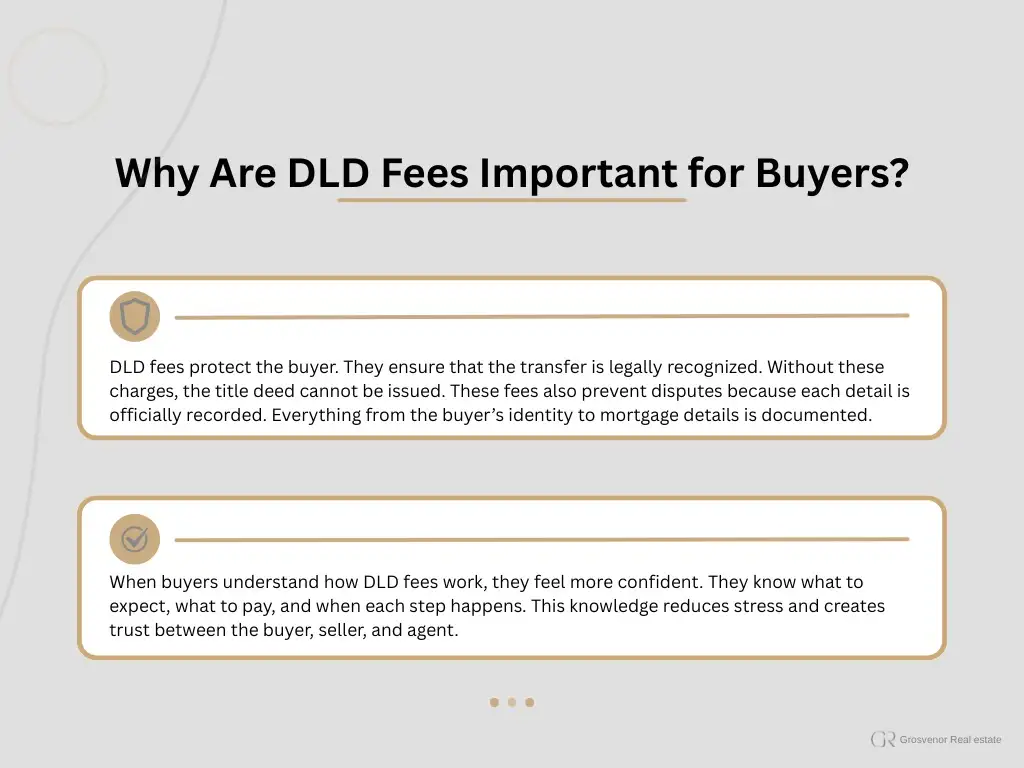
DLD fees protect the buyer. They ensure that the transfer is legally recognized. Without these charges, the title deed cannot be issued. These fees also prevent disputes because each detail is officially recorded. Everything from the buyer’s identity to mortgage details is documented.
When buyers understand how DLD fees work, they feel more confident. They know what to expect, what to pay, and when each step happens. This knowledge reduces stress and creates trust between the buyer, seller, and agent.
Do DLD Fees Affect Investment Planning?
Yes, very strongly. Because the main fee is 4 percent of the price, the amount becomes significant for mid-range and luxury homes. Investors often calculate the total entry cost, including transfer fees, service charges, mortgage fees, and other closing charges. When these costs are clear, investment decisions become easier.
For example:
If a buyer purchases a property worth AED 2 million, the DLD transfer fee alone is AED 80,000. If the buyer also takes a mortgage, additional registration costs apply.
Clear budgeting at the start prevents last-minute shocks.
Are There Discounts on Renting, Leasing, or DLD Fees?
Dubai’s property market often introduces promotions to attract buyers and tenants. These may include partial or full waivers on DLD fees. Such offers usually appear during major project launches, seasonal campaigns, or periods when developers want to boost sales. These discounts can save buyers thousands of dirhams, especially in premium communities.
In the rental market, some communities offer reduced service charges or early payment discounts. When maintenance budgets improve or occupancy rates need support, landlords may also adjust annual rent or offer incentives. New buildings sometimes lower initial rates to fill units faster.
These patterns help buyers and tenants negotiate better deals. Understanding the fee structure also helps investors measure whether a promotional offer is valuable or simply a marketing tactic. When you know the real cost, you can compare offers confidently.
What Do DLD Fees Include? (Simple Breakdown)
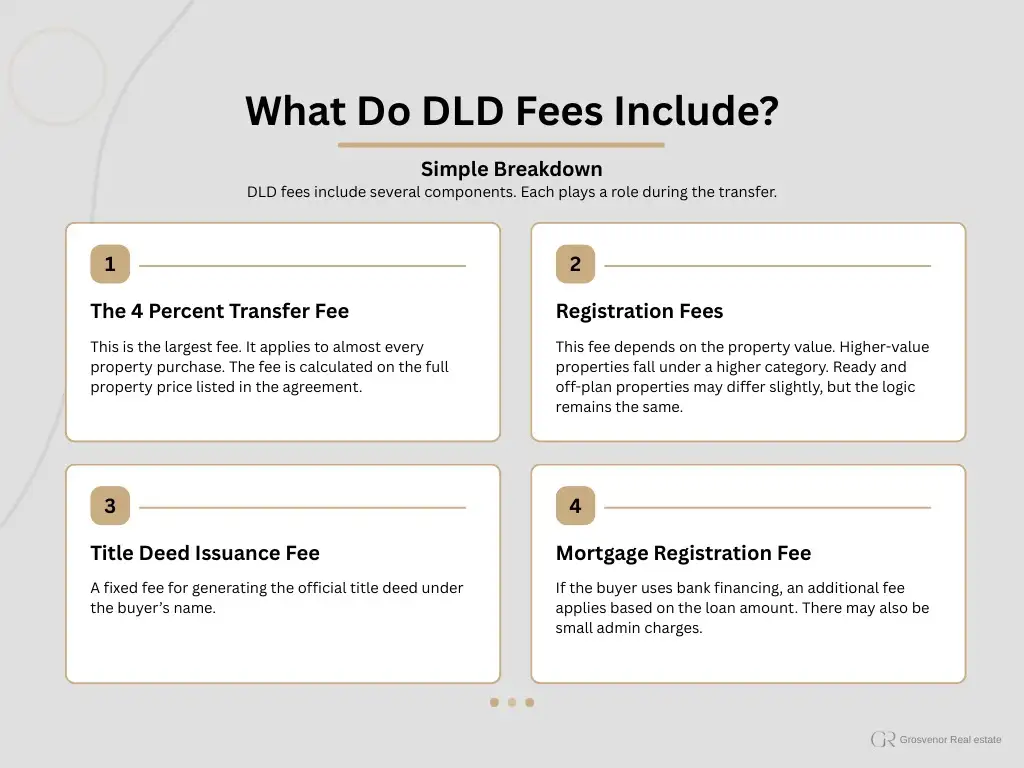
DLD fees include several components. Each plays a role during the transfer.
The 4 Percent Transfer Fee
This is the largest fee. It applies to almost every property purchase. The fee is calculated on the full property price listed in the agreement.
Registration Fees
This fee depends on the property value. Higher-value properties fall under a higher category. Ready and off-plan properties may differ slightly, but the logic remains the same.
Title Deed Issuance Fee
A fixed fee for generating the official title deed under the buyer’s name.
Mortgage Registration Fee
If the buyer uses bank financing, an additional fee applies based on the loan amount. There may also be small admin charges.
How Are DLD Fees Calculated?
The calculation starts with the sale price. Once buyer and seller agree on the final figure, the 4 percent fee becomes clear. Registration trustees handle the payment on behalf of the government. They ensure everything is documented correctly before the transfer moves forward.
Registration fees depend on price thresholds. Title deed charges stay fixed. Mortgage buyers pay based on the bank loan. Digital payment platforms record each transaction and provide instant confirmation. Without paying these fees, the transfer cannot be completed.
Who Pays the DLD Fees?
In most transactions, the buyer pays the DLD fees. This is the normal market practice. Some developers may offer to share the cost or cover it fully as part of promotional campaigns. In the secondary market, the buyer usually takes full responsibility.
Buyers should always check the Sale and Purchase Agreement to confirm who pays what. When everything is clearly written, the transaction becomes smoother and avoids disputes.
Do Off-Plan Properties Have Different DLD Fees?
The 4 percent rule still applies to off-plan purchases. Buyers must also complete an Oqood registration, which records the off-plan sale in the system. The title deed is issued later, once the building is completed.
Developers sometimes include promotions like fee waivers or split payments, especially when launching the best off-plan projects in Dubai. These deals appear mainly during new releases, where developers aim to attract more buyers. Secondary market purchasers rarely receive such discounts. However, negotiating the property price can still indirectly reduce DLD fees.
What Are the Common Mistakes Buyers Make About DLD Fees?
Several common mistakes appear repeatedly among buyers. Many focus only on the property price and forget that closing costs can add up quickly, especially when they plan to invest in Dubai real estate. Others overlook mortgage registration fees, not realising that financing always brings additional charges. Promotions are often misunderstood as well, since a discount may not always reflect real savings unless the base fee structure is clear. Another frequent issue is failing to confirm fee responsibility in writing, which leads to unnecessary disputes because assumptions replace clear agreements.
Practical Tips to Manage DLD Fees Effectively
Buyers can avoid confusion by following a few simple strategies. It helps to talk to professionals early because experienced agents understand the latest fee structures and promotional offers. Tracking market campaigns is also useful, as developers often release seasonal incentives that reduce the overall fee burden. Buyers should also check whether negotiation affects the fees, since lowering the property price automatically reduces the four percent transfer charge.
What brings you to us today?
Whether you want to invest in Dubai real estate or buy property in Dubai, understanding DLD fees in Dubai helps you plan your budget with confidence. These fees apply to off-plan properties in Dubai, ready homes, and even mortgage-backed purchases. Buyers often explore property management Dubai services and property solutions to handle the process smoothly. Grosvenor Real Estate in Dubai also guides investors through transfer charges, registration steps, and financing costs.
Keep all receipts.
Digital records help with future resale, mortgage updates, or ownership queries. When buyers follow these steps, the transfer process becomes faster and smoother, especially for those dealing with real estate in Dubai, where proper documentation ensures hassle-free property management and long-term security something trusted firms like Dubai Land Department (DLD) registered real estate companies in Dubai strongly emphasize.
FAQs About DLD Fees in Dubai
Once paid, DLD fees are generally non-refundable unless there is a legal reason for reversal.
The fee itself is fixed. However, developers can offer promotional waivers or share the cost.
Fees are paid at the time of property transfer through approved payment channels.
No. These fees relate only to property ownership transfers.
Yes. Mortgage buyers pay extra registration fees based on the loan amount. Cash buyers skip this part.
Conclusion:
DLD fees in Dubai are an essential part of buying property. They cover the transfer, registration, and title deed processes that protect your ownership rights. When you understand DLD fees and how they work, you can plan your budget, avoid surprises, and complete your purchase with confidence. Clear knowledge makes every step of your property journey easier.