

Dubai’s real estate market is one of the most dynamic in the world. With millions of tourists visiting every year and a growing number of long-term residents, property owners often wonder whether short-term or long-term rentals make better financial sense.
In Dubai, short-term rentals offer higher profit potential but require active management, while long-term rentals provide stable income with less effort. The right choice depends on your property’s location, your investment goals, and how much time you want to spend managing tenants or guests.
This guide from Grosvenor Real Estate Dubai breaks down the differences so you can choose the right approach for your investment goals.
What Is a Short-Term Rental in Dubai?
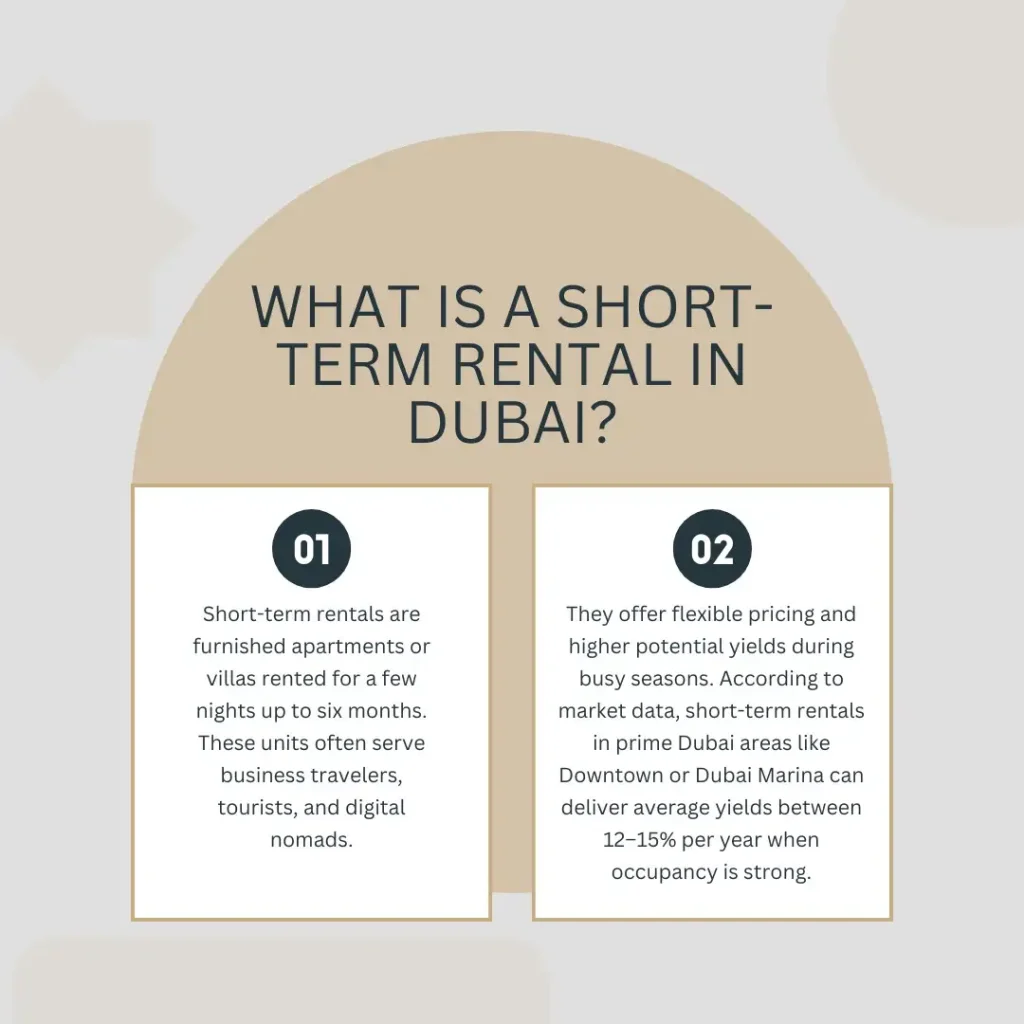
Short-term rentals are furnished apartments or villas rented for a few nights up to six months. These units often serve business travelers, tourists, and digital nomads.
They offer flexible pricing and higher potential yields during busy seasons. According to market data, short-term rentals in prime Dubai areas like Downtown or Dubai Marina can deliver average yields between 12–15% per year when occupancy is strong.
What Is a Long-Term Rental?
A long-term rental typically refers to a lease lasting one year or more, registered through Dubai’s Ejari system. These properties are usually unfurnished and cater to residents or families.
Long-term rentals generate consistent monthly income, require fewer turnovers, and allow property owners to spend less time managing tenants. The trade-off is lower yield, often in the 5–8% range, depending on location.
Which Option Offers Better Returns in Dubai?
Short-term rentals usually produce higher gross income but also involve more expenses such as cleaning, furnishing, and marketing. Long-term rentals provide predictable revenue but less flexibility to adjust prices or remove tenants.
For example, a one-bedroom apartment in Downtown Dubai earning AED 1,000 per night at 70% occupancy could gross around AED 21,000 per month. However, when you factor in service charges, cleaning, and management fees, the actual profit may be closer to AED 14,000.
By contrast, the same unit leased long-term at AED 9,000 per month offers stability but a lower overall yield.
How Do Management Effort and Flexibility Compare?
Short-term rentals require more active management. You need to handle guest bookings, coordinate cleaning, and ensure compliance with the Dubai Department of Economy and Tourism (DET). Many investors hire professional agencies for this.
Long-term rentals, on the other hand, involve fewer responsibilities. Once the lease is signed, the owner usually has minimal involvement until renewal. This makes them ideal for investors who live abroad or prefer hands-off management.
If you want professional help managing either model, you can explore our Dubai property management services.
What About Legal and Regulatory Differences?
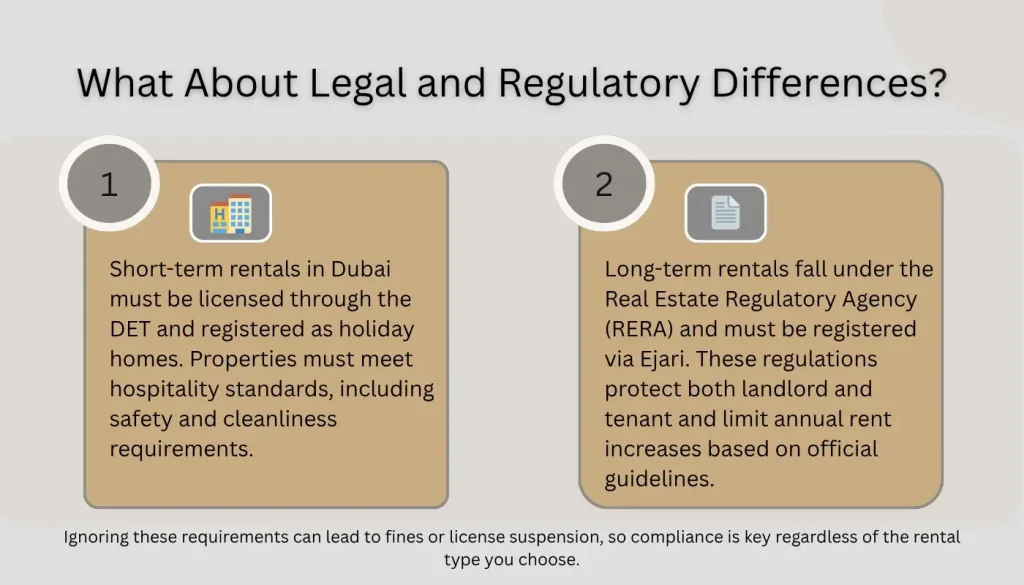
Short-term rentals in Dubai must be licensed through the DET and registered as holiday homes. Properties must meet hospitality standards, including safety and cleanliness requirements.
Long-term rentals are regulated by the Real Estate Regulatory Agency (RERA) and must be registered via Ejari. These regulations protect both landlord and tenant and limit annual rent increases based on official guidelines.
Ignoring these requirements can lead to fines or license suspension, so compliance is key regardless of the rental type you choose.
How Do Taxes and Fees Affect Your Rental Profit in Dubai?
Dubai offers one of the world’s most tax-friendly real estate markets, but there are still some costs that impact your actual returns. Property owners don’t pay income tax on rental earnings, yet they must account for service charges, maintenance costs, and in some cases 5% VAT on property management services. Short-term rentals also attract tourism dirham fees, which vary depending on the star rating of the accommodation and are collected per night from guests.
Long-term rentals, on the other hand, involve fewer recurring charges but often come with agency fees, Ejari registration, and annual maintenance costs. While these are predictable and easier to manage, they can still reduce your overall yield if not planned well. To get a clear picture, investors should calculate their net yield—subtracting all these costs from gross rent—to understand the real profitability of their property in Dubai’s competitive market.
What’s the Future of the Rental Market in Dubai?
The rental market in Dubai is evolving rapidly, driven by strong economic growth, a surge in expat relocations, and government initiatives promoting tourism. The rise of digital nomad visas and flexible working trends has made short-term rentals increasingly popular among professionals who value freedom and mobility. In tourist-heavy zones like Downtown Dubai and Palm Jumeirah, this trend is likely to continue, giving property owners more opportunities to earn higher yields from short stays.
At the same time, long-term rentals remain the backbone of Dubai’s housing market. As the population continues to grow, areas such as Dubai Hills, Mirdif, and JVC are seeing consistent demand from families and professionals seeking stability. This ensures steady occupancy rates for landlords. Looking ahead, the future will likely favor a hybrid strategy, where investors balance both short-term flexibility and long-term stability to maximize returns throughout the year.
Which Is More Affected by Market Conditions?
Dubai’s short-term rental market is sensitive to seasonality. During winter months, when tourism peaks, occupancy rates and returns rise sharply. In summer, demand typically drops.
Long-term rentals are less affected by seasonal trends. They appeal to residents, employees, and families who need stability. In times of market fluctuation, they offer a steadier income stream.
What Are You Missing?
Many investors ignore the hybrid approach, where owners switch between short- and long-term strategies based on demand. For example, an owner might list a unit as a holiday home during peak tourism months and convert it to a one-year lease during slower seasons.
Choosing the right management plan early can save significant costs and compliance stress later.
FAQs
Not always. Profit depends on location, occupancy rate, and management quality. High-demand areas may outperform, but in less central locations, long-term leases can yield better net returns.
Yes, but you’ll need to register the property with the DET and ensure your building allows holiday-home operations. Some communities restrict short-term rentals entirely.
Furnishing, cleaning, and platform service fees are the biggest expenses. Property management services can handle these tasks, but take a percentage of rental income.
Start by evaluating your location, time availability, and risk tolerance. If your property is in a tourist-heavy zone, short-term may pay off. If you prefer a steady income, go for long-term.
Conclusion
In simple terms, short-term rentals mean higher effort but potentially higher profit, while long-term rentals offer lower risk and steady returns. The right model depends on your goals and how involved you want to be.
At Grosvenor Real Estate, we help investors make data-backed decisions and handle all aspects of property management in Dubai. Contact us today to discuss your best strategy and maximize your property investment in Dubai.