
If you’re searching for a reliable and clear Dubai real estate forecast, you’ll find that the market is still one of the world’s strongest. Investors, end-users, and expats continue driving demand, while developers push forward with new projects. In this article, you’ll learn what’s rising, what’s cooling, and what smart buyers should focus on next.
As the market evolves, buyer preferences are becoming more refined, with growing interest in communities that offer lifestyle value, strong connectivity, and long-term livability. This shift is pushing developers to innovate with smarter layouts, greener designs, and mixed-use environments that support modern living. Understanding these trends helps both new and experienced investors navigate the landscape with clarity and confidence.
Dubai’s real estate forecast shows steady growth through 2025–2026. Prices are expected to rise moderately, rental demand remains strong, and new supply will shape market trends. Investors can expect stability, not a boom, but healthy long-term potential in well-planned communities and modern, sustainable developments.
Why Are Prices Expected to Rise Moderately?
The city continues to attract new residents and businesses, which increases both rental and buying demand. With the best real estate agents in Dubai guiding buyers through emerging opportunities, the market remains easy to navigate. At the same time, the government’s housing strategy ensures that future supply stays robust. This balance prevents extreme spikes while still keeping the market attractive for long-term investors.
This balanced growth model also strengthens market stability, which is especially important for investors seeking predictable returns. As Dubai expands its infrastructure, new transport links, commercial hubs, and lifestyle districts demand spreads across emerging communities, not just the city center. This creates more evenly distributed opportunities, reduces the risk of overinflated hotspots, and supports sustainable long-term appreciation across multiple segments of the market.
What Is the Dubai Real Estate Forecast for 2025–2026?
The outlook points to stable growth rather than explosive price jumps. Demand remains high due to population growth, rising foreign investment, and Dubai’s global appeal. However, a steady pipeline of new housing means price increases will be more controlled.
Dubai’s property market points toward steady, sustainable growth. Residential prices are projected to rise by 5–8% annually, supported by strong rental yields as expat demand continues to grow. While some oversupplied apartment clusters may experience slower momentum, interest is rapidly increasing in sustainable, smart, and suburban communities that offer better space, amenities, and long-term value.
Which Areas Could Perform Best?
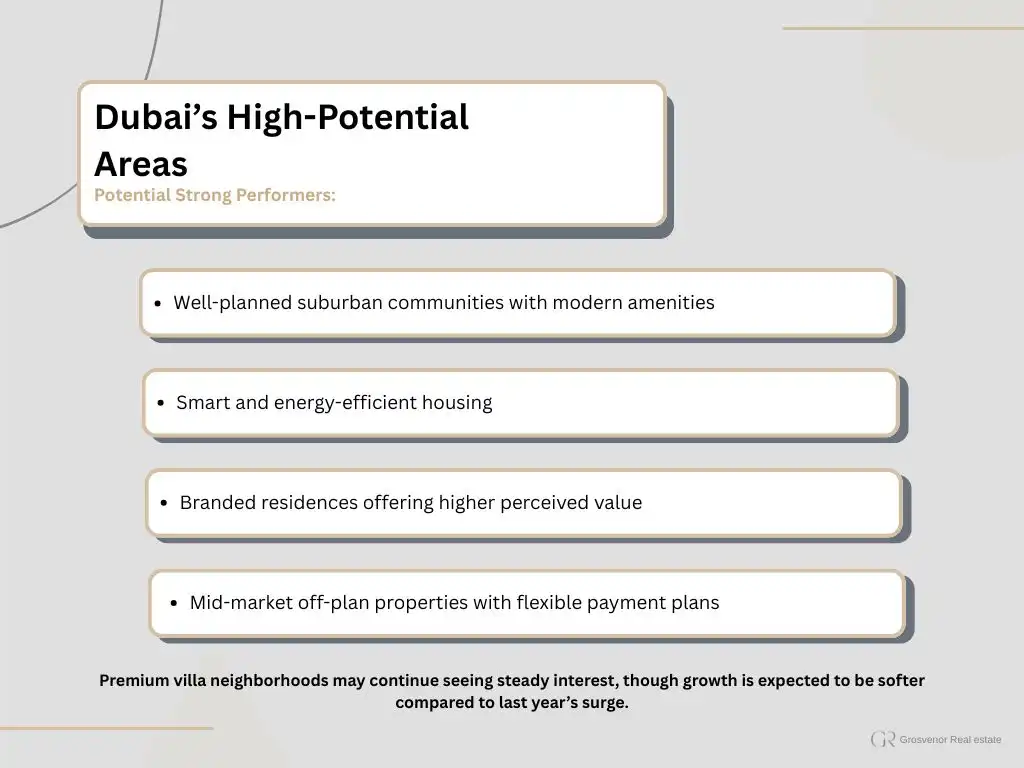
Potential Strong Performers:
- Well-planned suburban communities with modern amenities
- Smart and energy-efficient housing
- Branded residences offering higher perceived value
- Mid-market off-plan properties with flexible payment plans
Premium villa neighborhoods may continue seeing steady interest, though growth is expected to be softer compared to last year’s surge.
Is Dubai’s Rental Market Still Strong?
Yes. Rentals remain one of the biggest strengths of Dubai’s property market. Population growth, new business arrivals, and lifestyle migrations continue fueling occupancy rates.
Current trends among renters show a clear shift in lifestyle preferences across Dubai. Many tenants now prioritize bigger homes and affordable suburban communities that offer more space and better value. With professional real estate management Dubai services helping maintain and optimize these properties, there is also a rising interest in modern amenities, including coworking areas, wellness facilities, and environmentally friendly designs that support healthier living.
Additionally, demand is growing rapidly in neighborhoods with convenient metro or highway access, as connectivity remains a major factor in renters’ decision-making.
Will New Supply Affect the Market?
Dubai’s upcoming housing inventory is significant, and it will influence price behavior. While high-demand areas will hold value, some mid-tier apartment clusters might experience softer growth as more units are delivered.
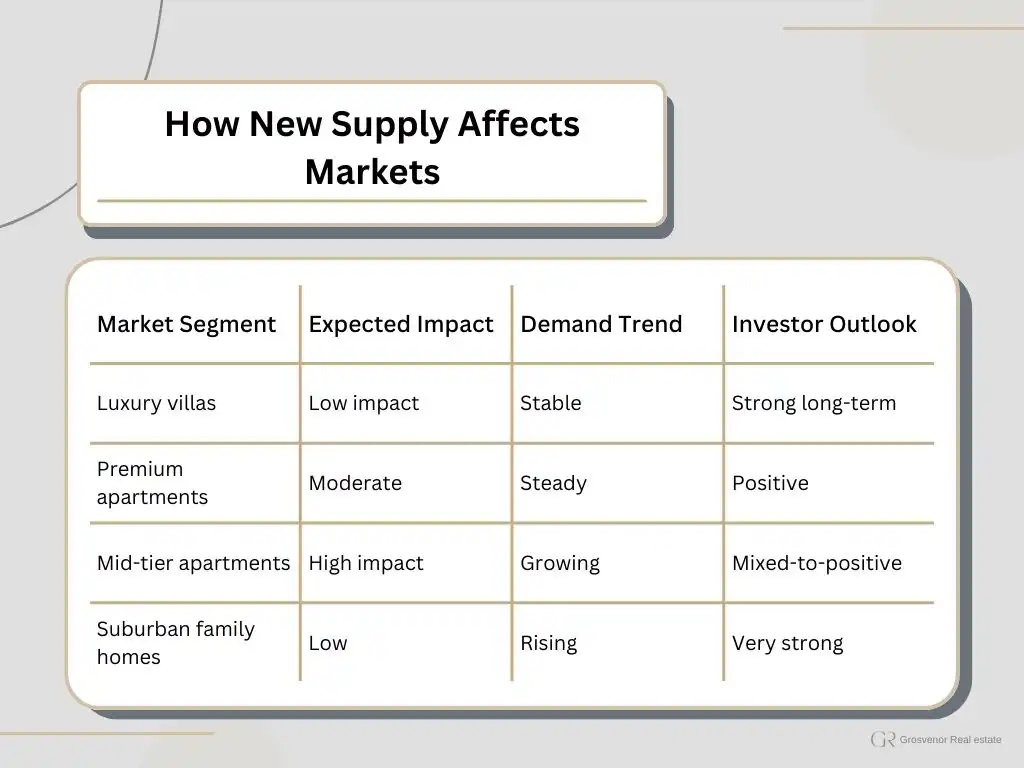
How New Supply Could Impact Different Market Segments
| Market Segment | Expected Impact | Demand Trend | Investor Outlook |
| Luxury villas | Low impact | Stable | Strong long-term |
| Premium apartments | Moderate | Steady | Positive |
| Mid-tier apartments | High impact | Growing | Mixed-to-positive |
| Suburban family homes | Low | Rising | Very strong |
Don’t Miss About Dubai’s 2025–2026 Market Outlook
Most forecasts focus heavily on rising prices but often overlook deeper shifts shaping Dubai’s future property landscape. One major trend is the growing demand for quality-of-life communities, where modern amenities and comfortable living outweigh simply being in central locations. This shift is particularly important for those exploring Dubai real estate investment, as it highlights areas with long-term value and strong growth potential.
There is also increasing long-term value in sustainable and smart home developments, which appeal to environmentally conscious buyers and tech-focused investors. Additionally, the rise of remote and hybrid work has boosted interest in family-friendly suburban areas, where residents can enjoy more space, privacy, and a balanced lifestyle, all factors that significantly influence future market performance.
Moreover, infrastructure expansions, such as new metro lines, highways, and community amenities, are shaping the attractiveness of emerging neighborhoods. Areas like Emirates Hills, with planned schools, healthcare facilities, and recreational spaces, tend to experience higher demand and stronger property appreciation over time.
How to Make Smart Real Estate Decisions in Dubai
If you’re exploring investment opportunities, consider comparing communities, rental yields, and future infrastructure plans. With the expertise of Grosvenor Real Estate, you can access professional guidance through their property consultation services or explore valuation services to understand the true market value before investing.
FAQs About the Dubai Real Estate Forecast
Yes. With stable growth, attractive rental yields, and improving infrastructure, 2025 offers a balanced entry point for buyers and investors.
A major drop is unlikely. Some segments may stabilize due to new supply, but market fundamentals remain strong.
Off-plan projects with flexible payment plans and modern amenities remain a smart, future-focused investment option.
Homes in sustainable, well-designed communities with strong connectivity tend to deliver the best appreciation and demand.
Villas in Emirates Hills hold strong long-term value, while apartments offer better rental yields. The right choice depends on your investment strategy.
Final Takeaway
Dubai’s real estate market is moving into a stable, mature growth phase. Prices will rise moderately, rental yields will remain strong, and demand is shifting toward future-ready communities. For buyers and investors, the message is simple: invest smartly, think long-term, and focus on quality.
Dubai’s property landscape is also becoming increasingly lifestyle-driven, which adds another layer of opportunity for investors. Buyers are prioritizing communities with green spaces, smart home upgrades, wellness facilities, and strong connectivity. Developments that deliver these features tend to attract long-term tenants and end-users, strengthening both capital appreciation and rental performance. This makes well-planned, high-quality projects some of the safest bets for the years ahead.